Romeo & Juliet
CYPT (2025)
Romeo & Juliet
Calgary Young People’s Theatre — October 2025
Directed by Jamie Dunsdon
Scenic Design and Construction by Jake Rose
Stage Managed by Tonisha Kroeger
Lights by Tauran Wood
Sound by Kristin Eveleigh
Wardrobe by Rebecca Toon
Props by Jamie Dunsdon
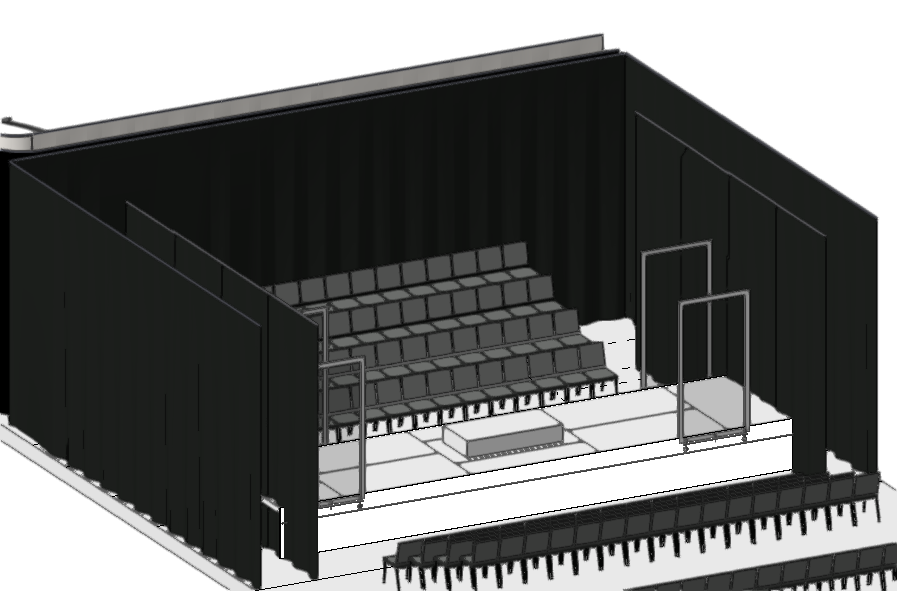
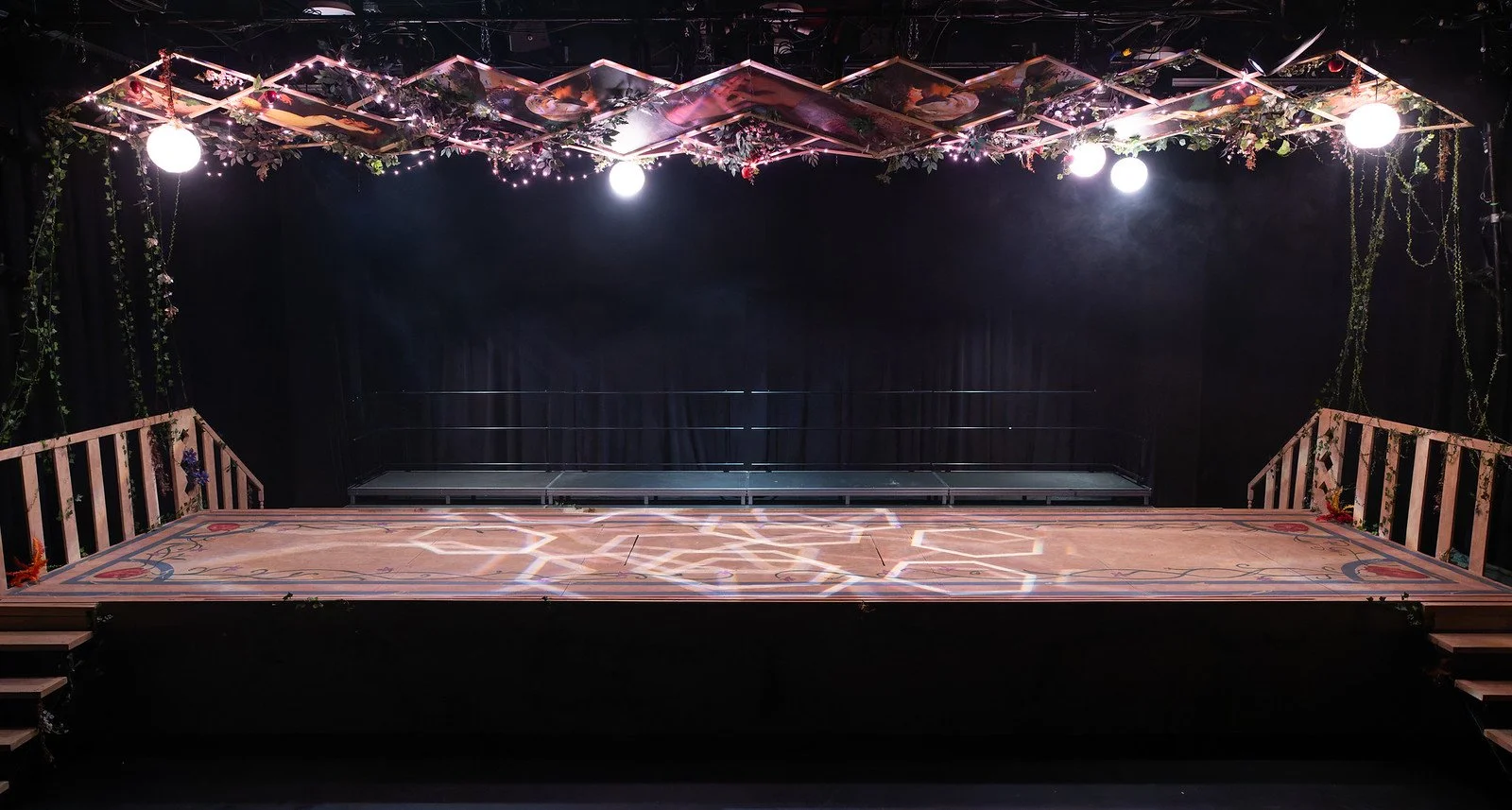
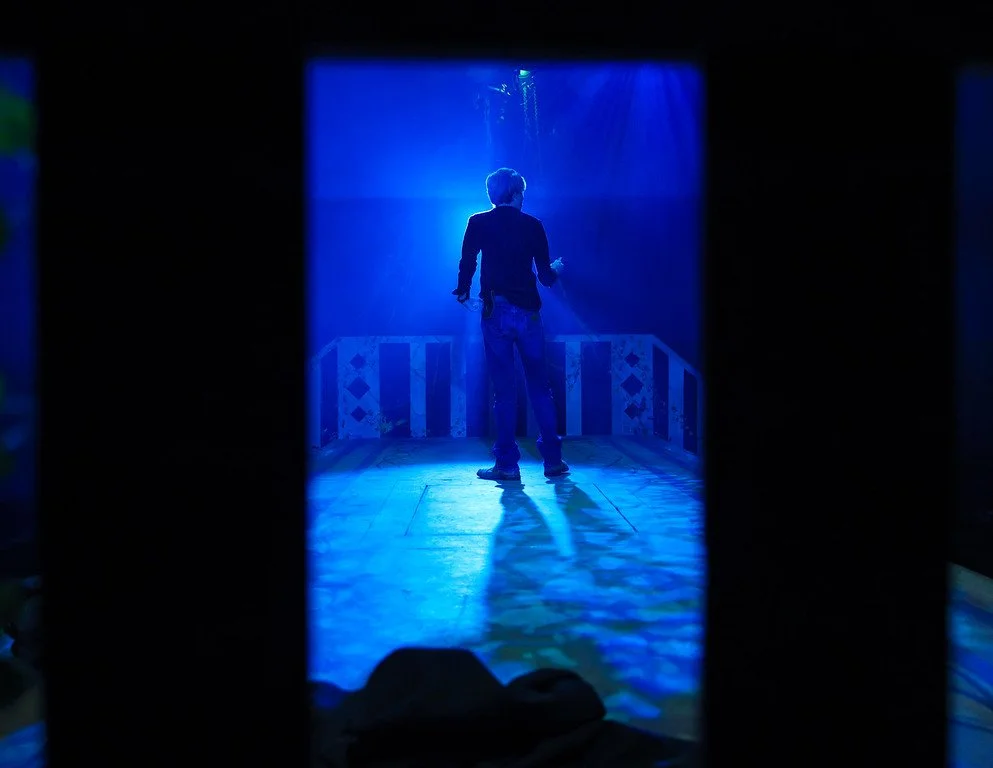
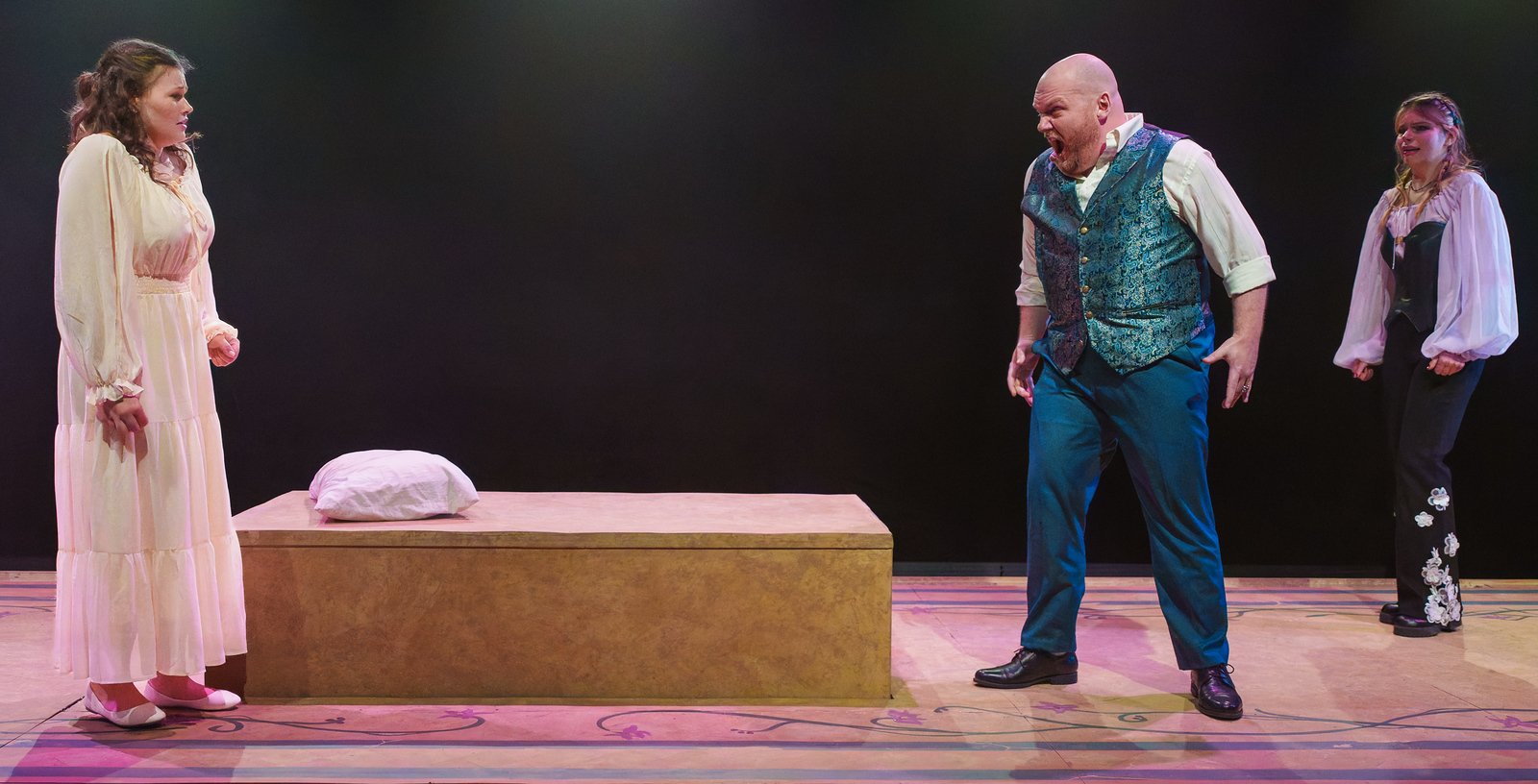
When Jamie asked me to design Romeo and Juliet, I immediately wanted to do it in an alley configuration. With a unique opportunity to cast the play age accurately — adults playing the parents to the teenagers who go through a tumultuous couple days played by actual teenagers— I wanted the audience to face each other and confront each other about youth suicide.
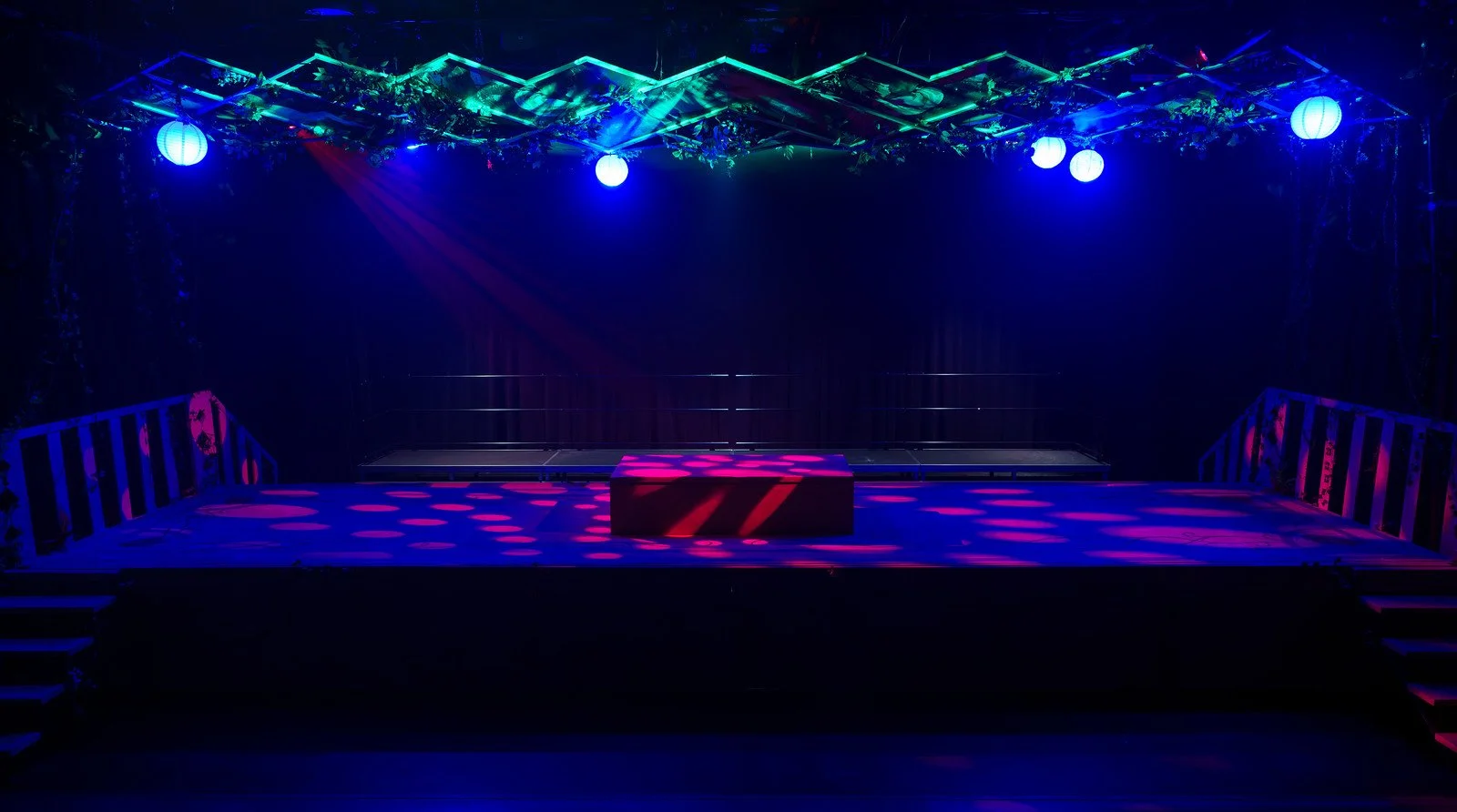
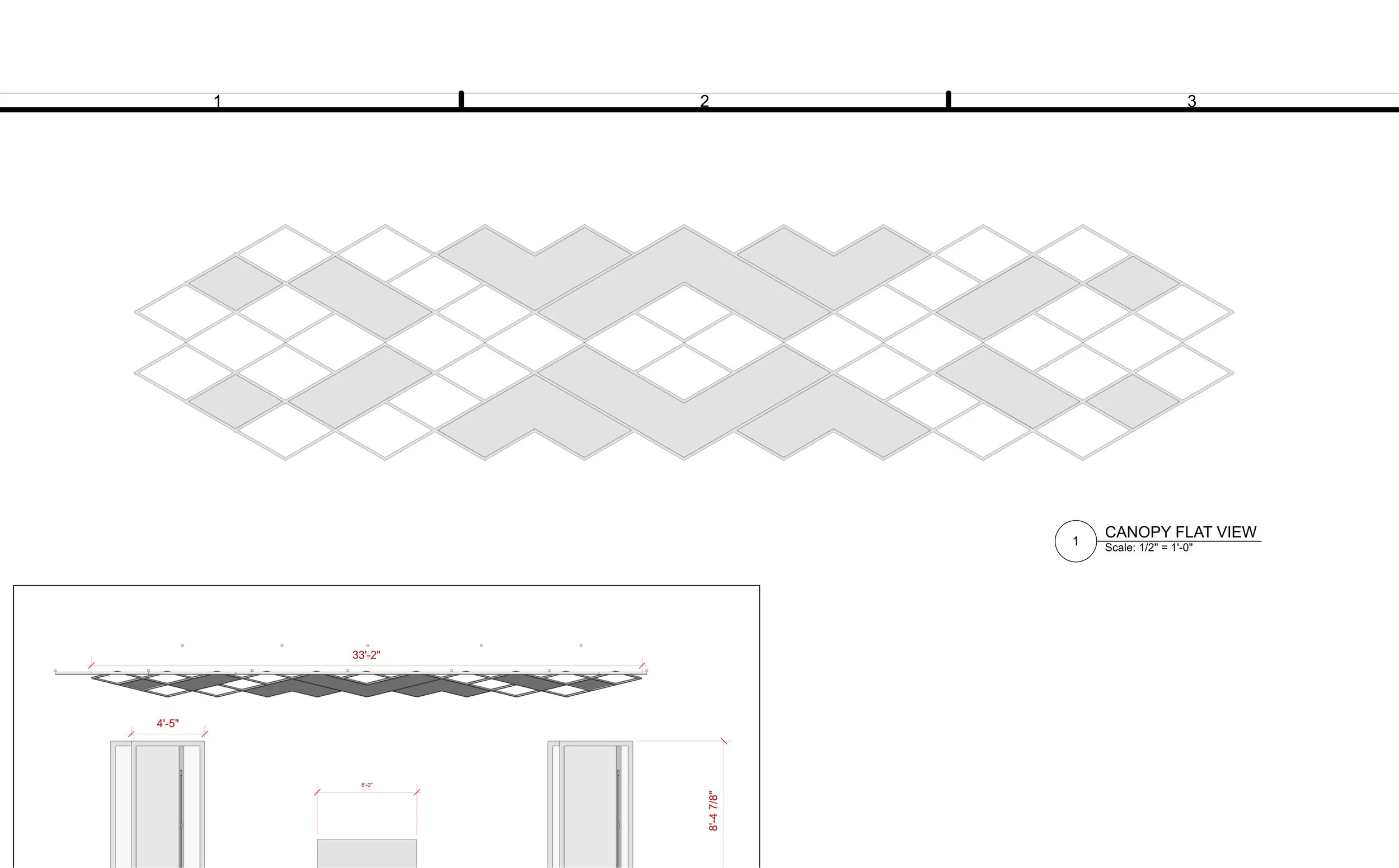
Framing the play through the eyes of Friar Lawrence, who both marries Romeo and Juliet, and helps contrive the plan for Juliet’s fake death, we introduced elements of botany, science, that would play off the romantic imagery and portrayals of the play. By poking at the romanticism and mythos the play has taken on, sometimes leaning into it, and sometimes averting it, we inspected the ways in which we justify and excuse youth violence. The canopy overhead and the paint on the floor of the stage were my explorations of this.
For scenes that needed a table, a bed, or a tomb, we made use of a mechanical lift. A seemingly solid block emerged from the floor of the stage and could raise up to 32”.
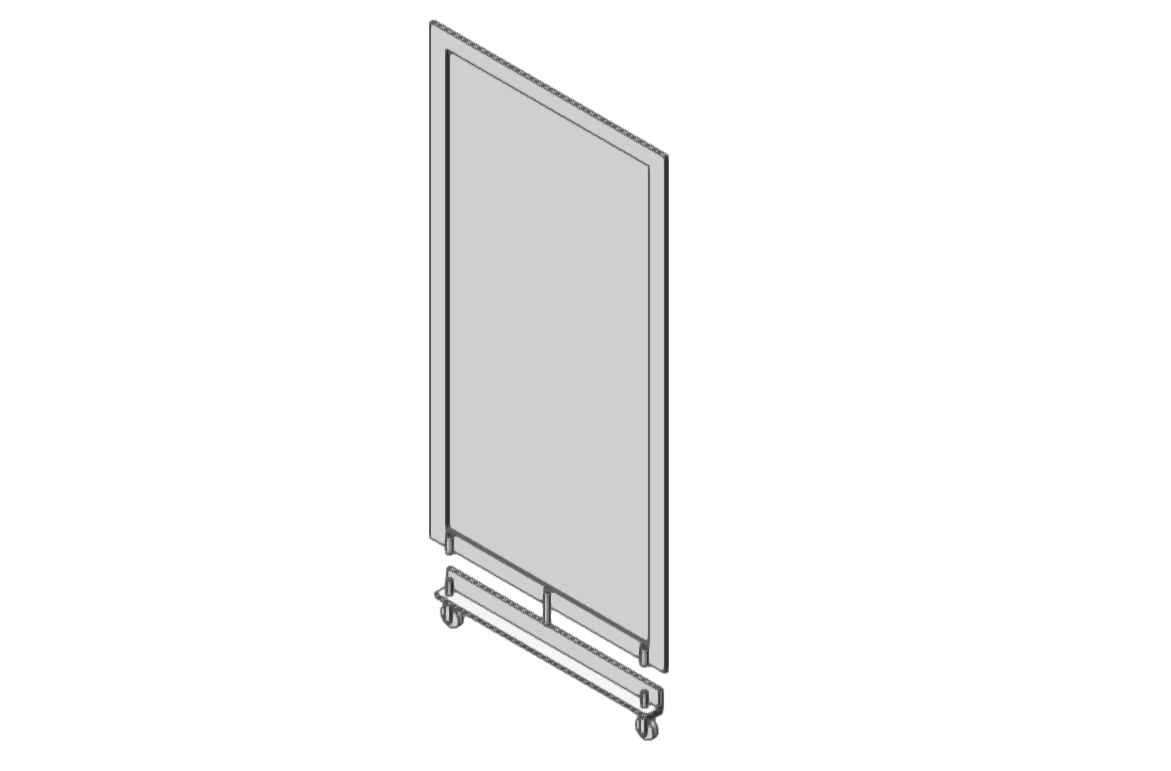
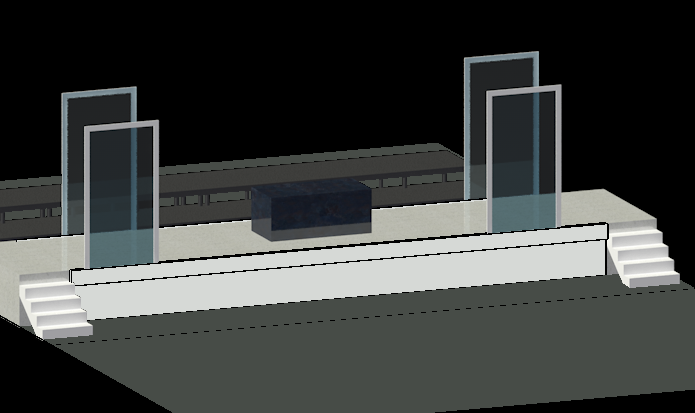
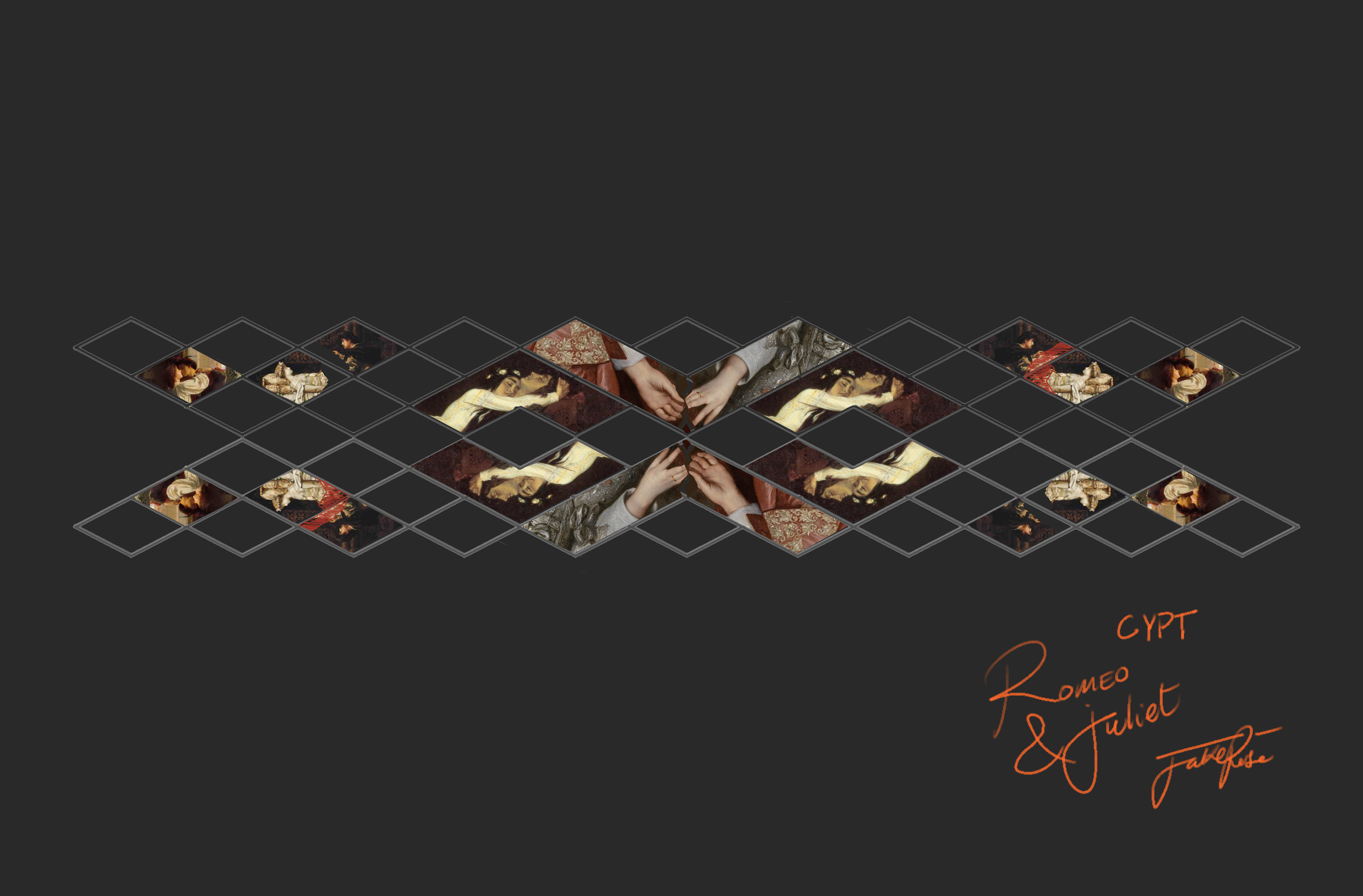
Our original design had utilized sliding and pivoting plexiglass panels, that were coated with a special rear-projection film that allowed actors to be seen while the glass caught the images from the projections. This concept did not make it to the final product, but would have indicated settings through the use of classical paintings.
“the best R & J set design I’ve seen in Calgary.” Caroline Russell-King, Postcard Reviews
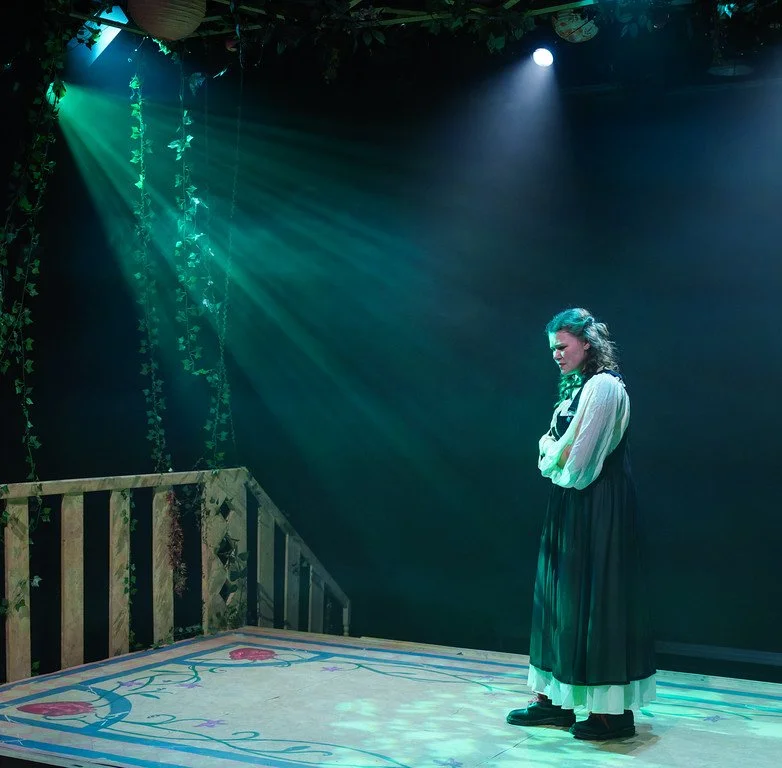
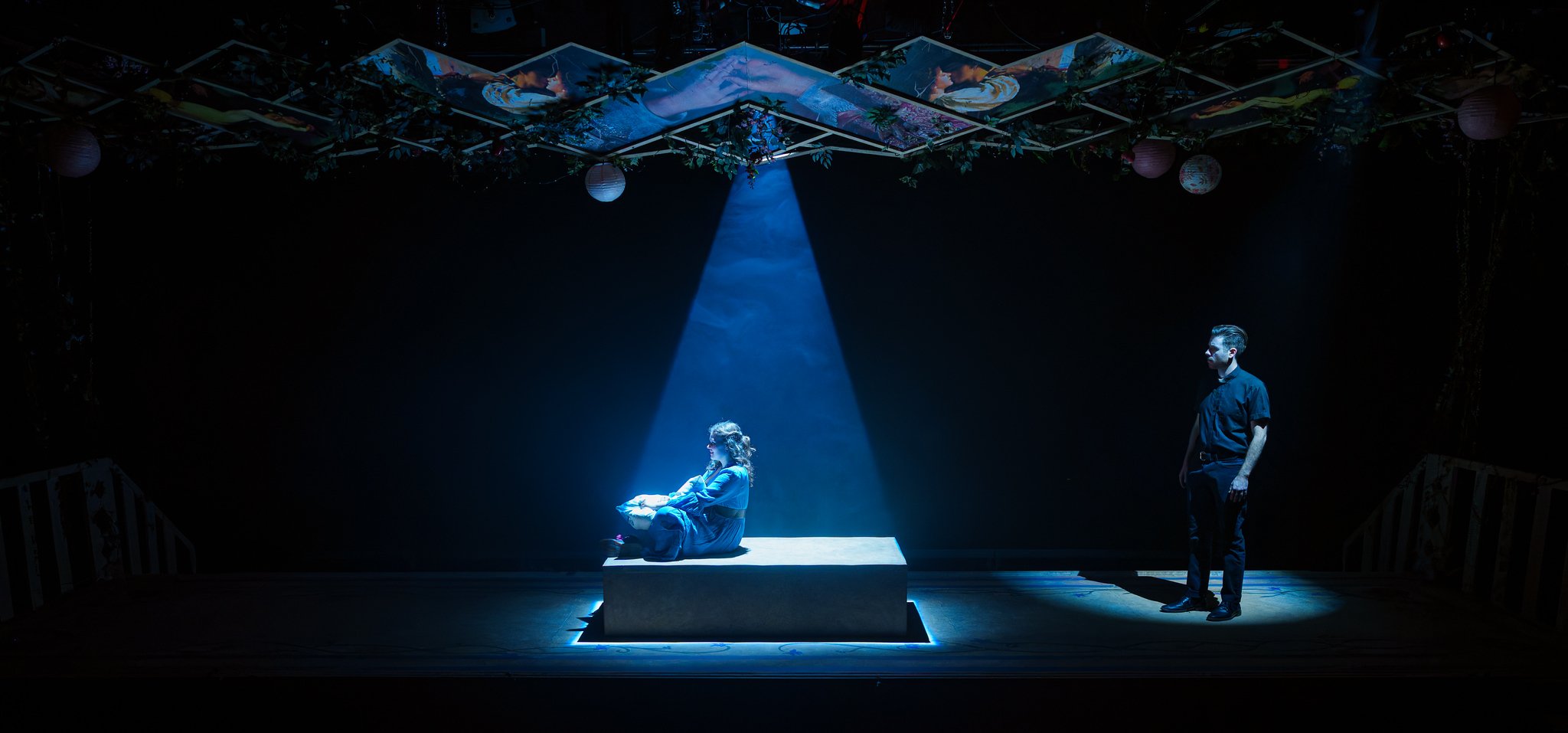
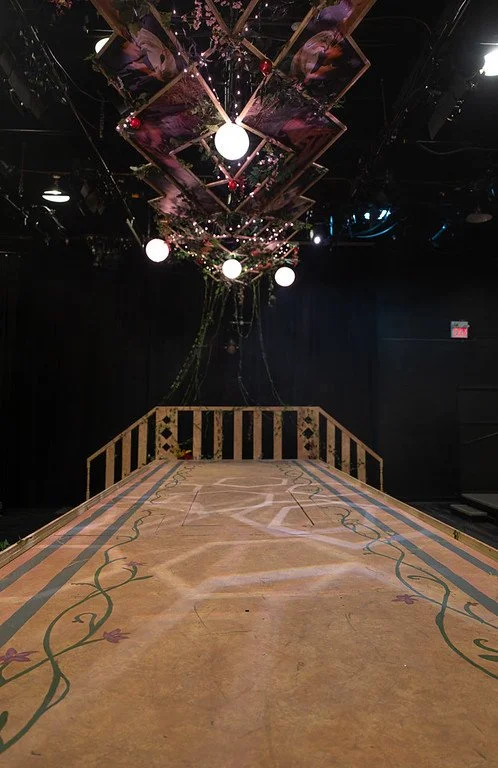
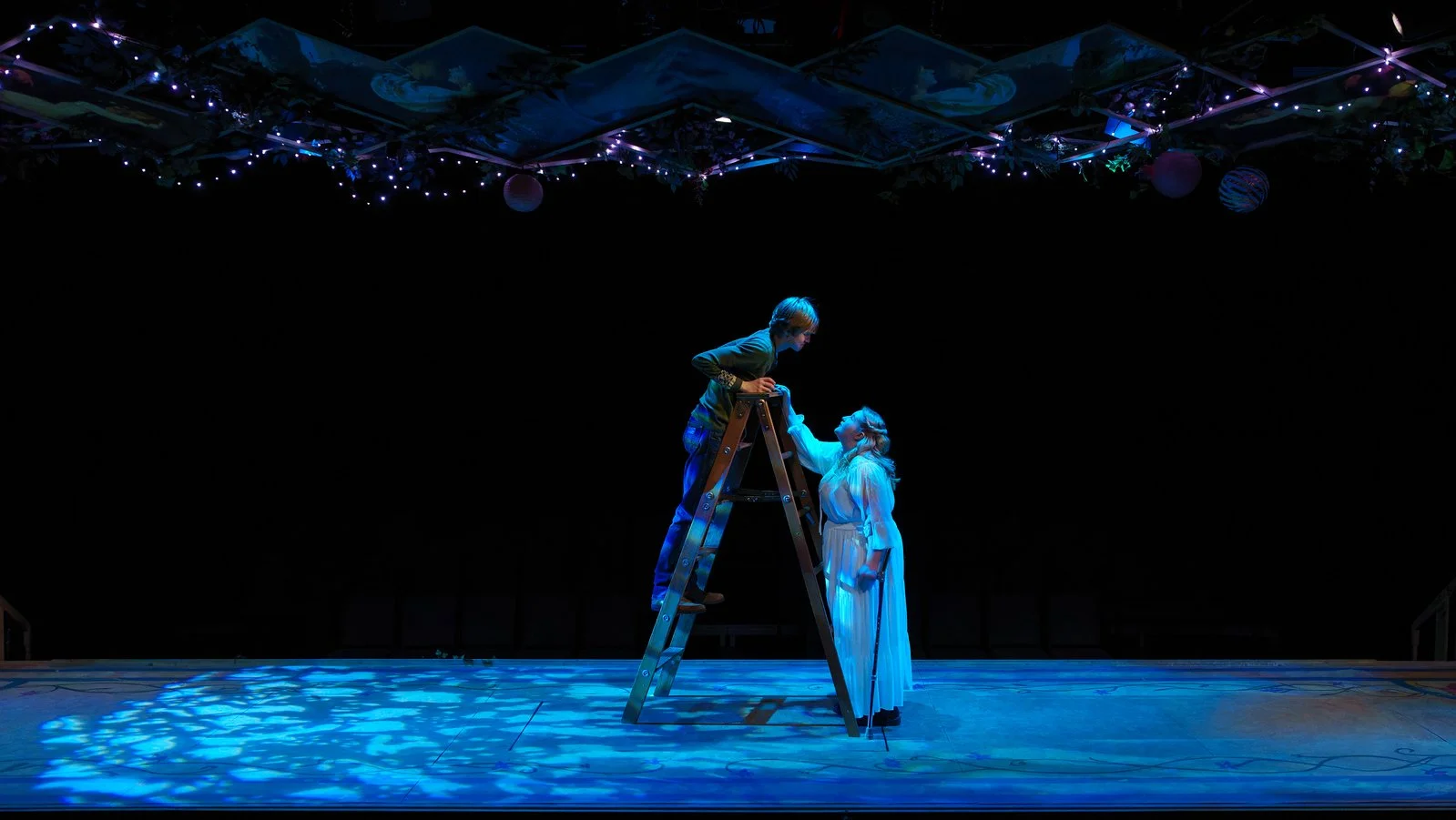
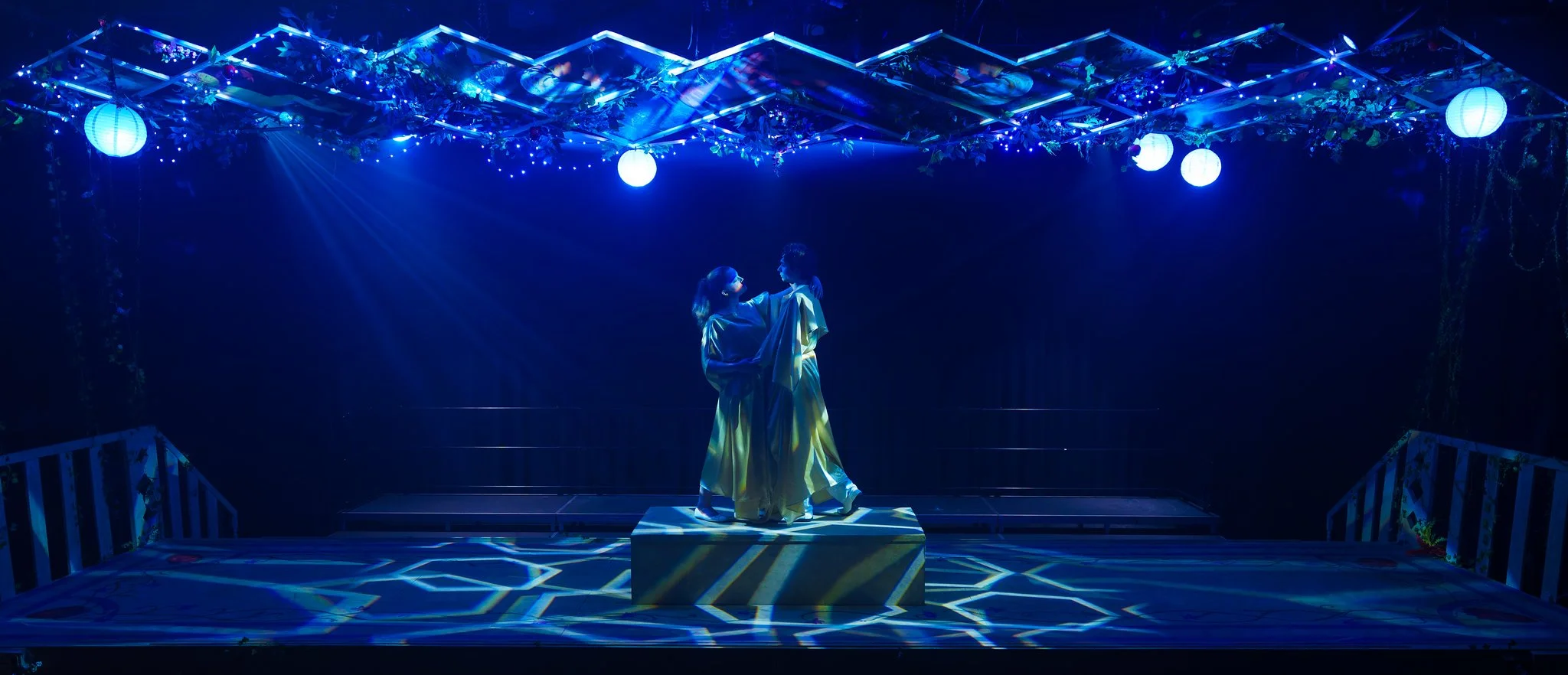
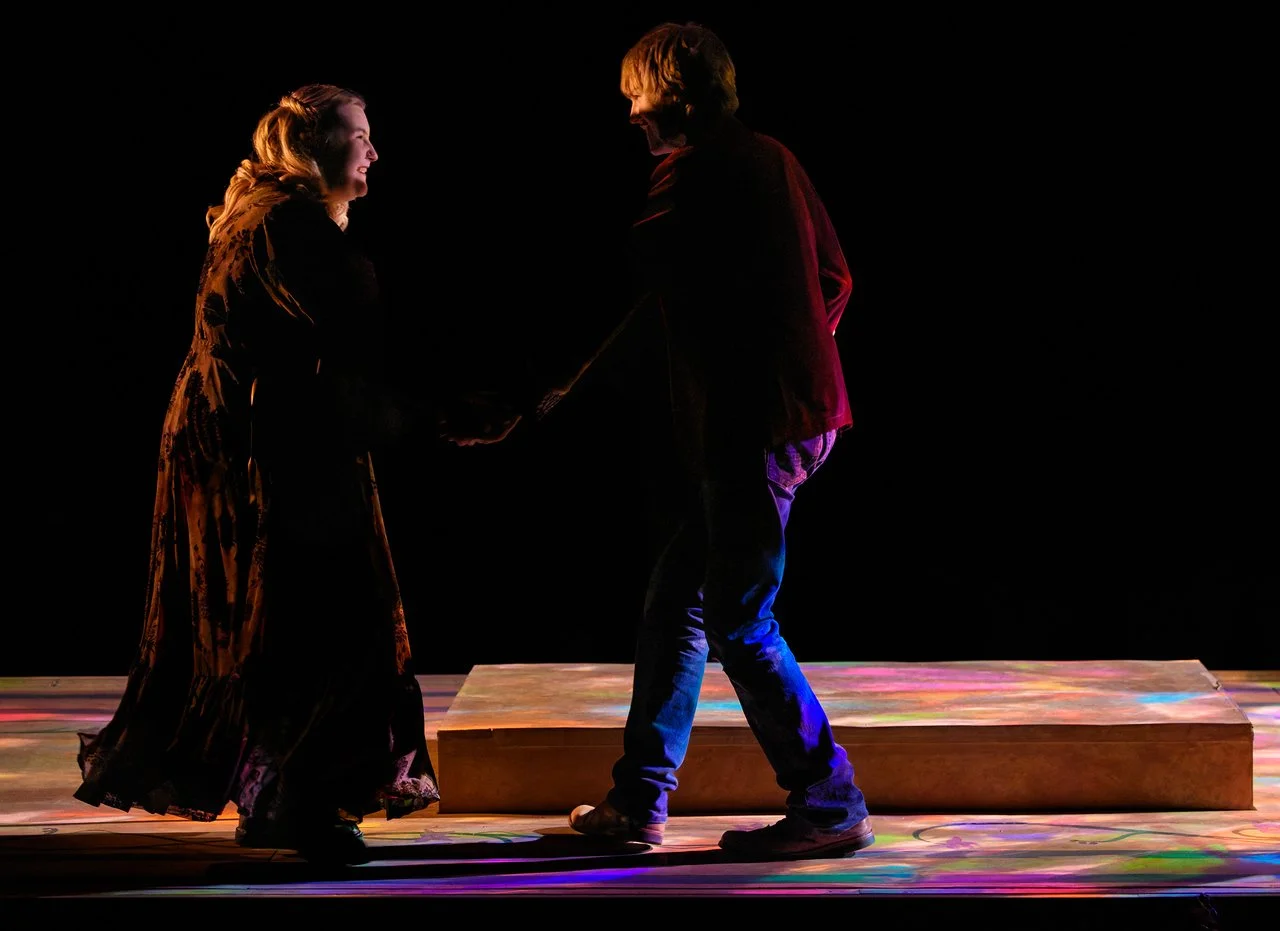
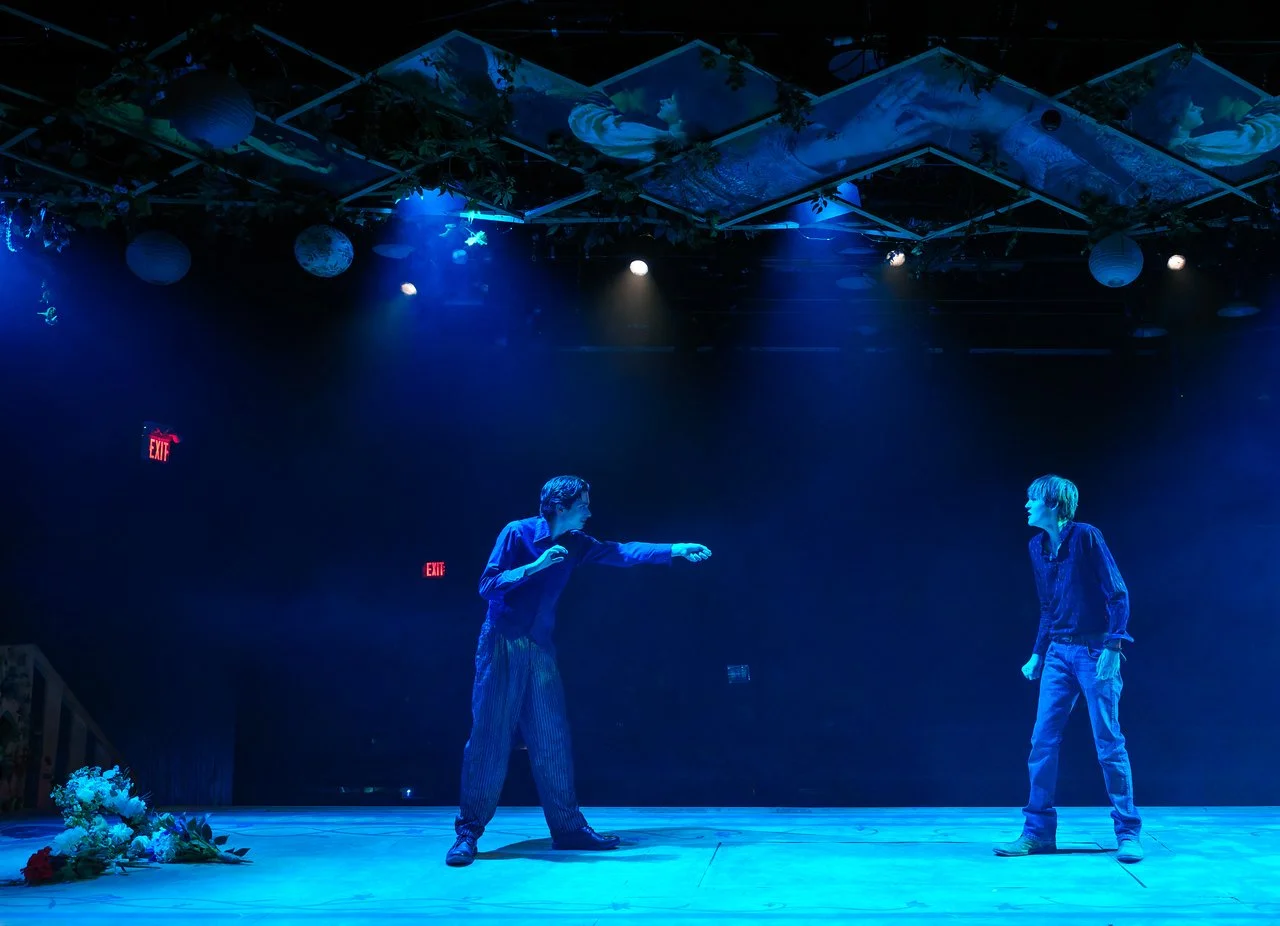
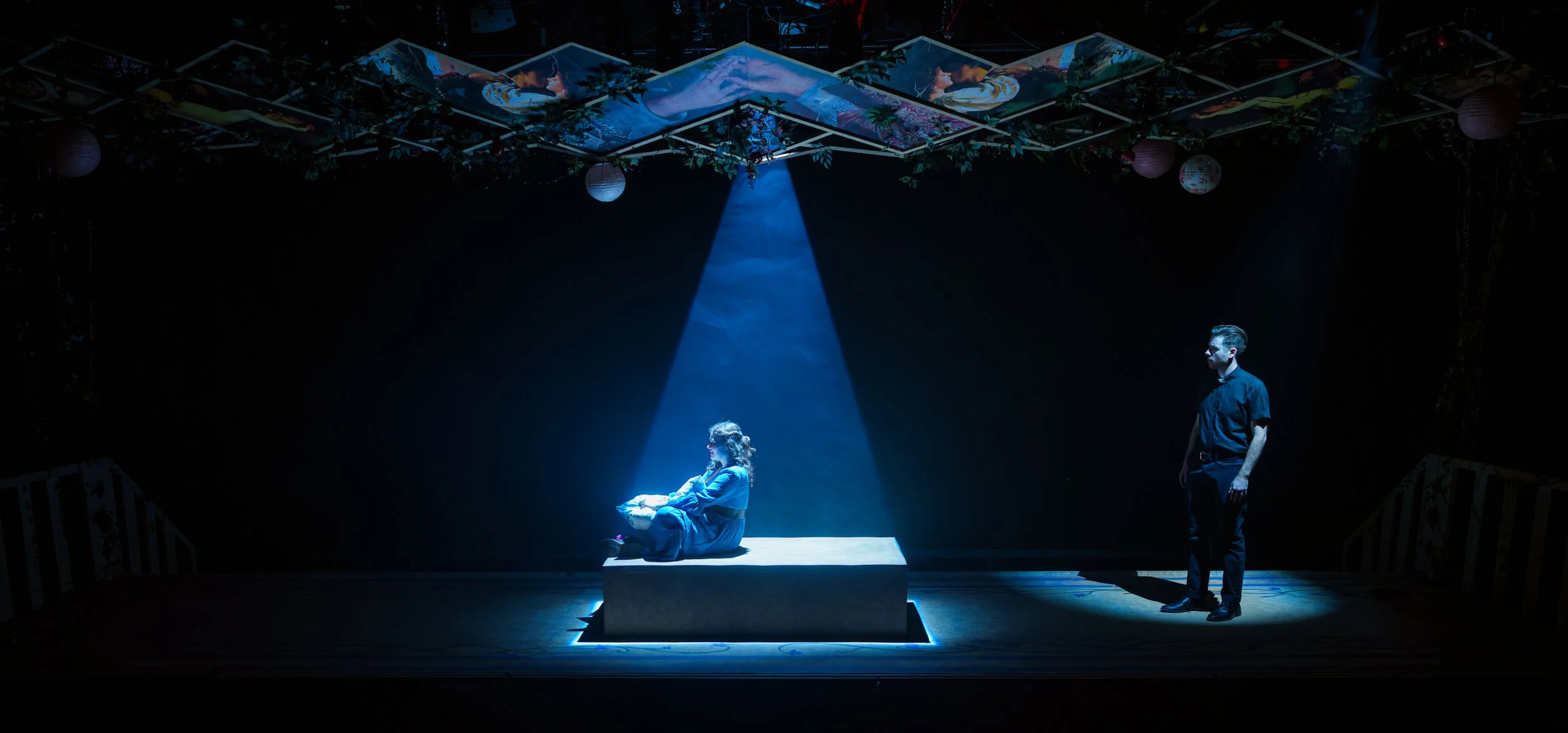
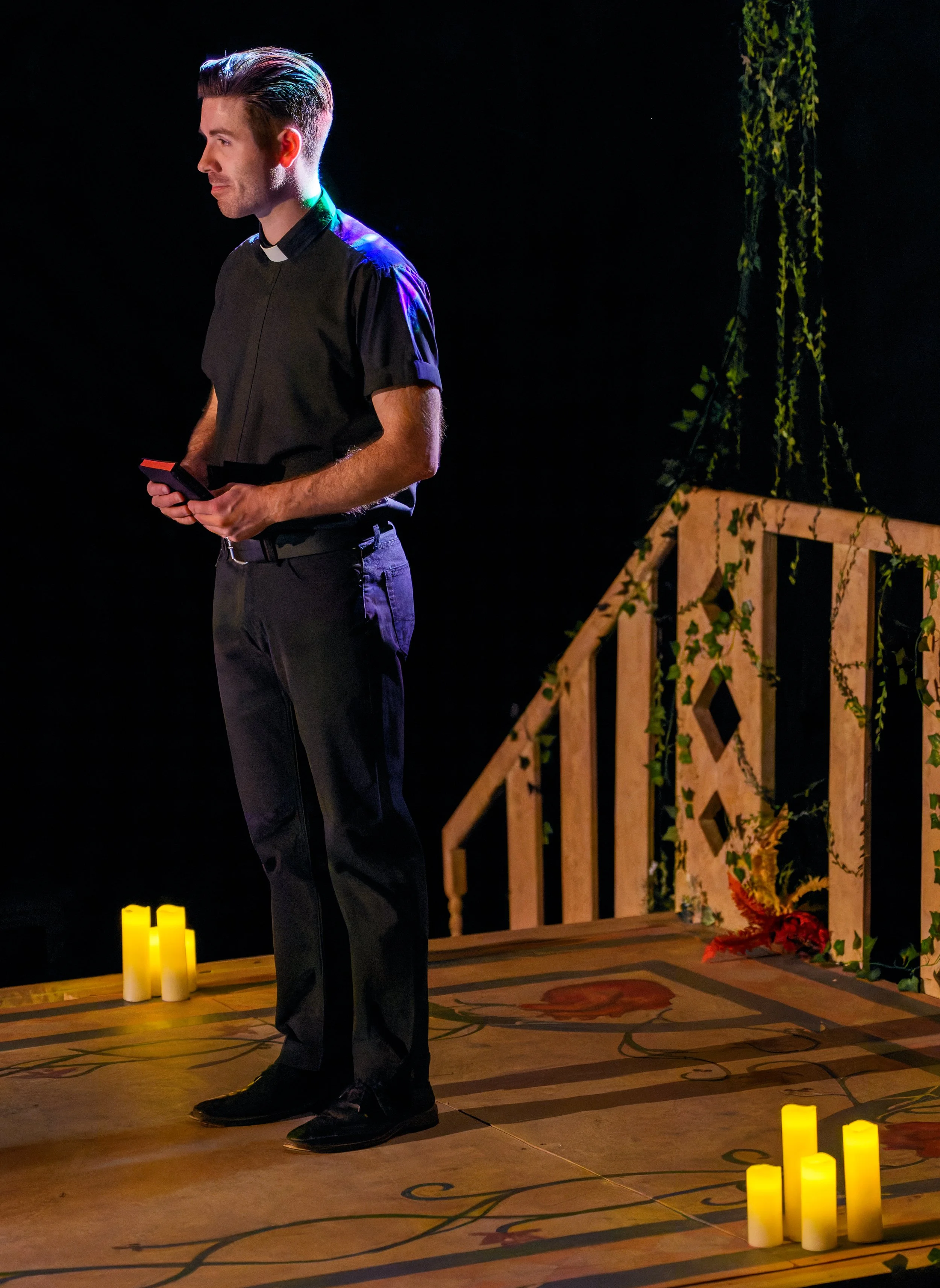
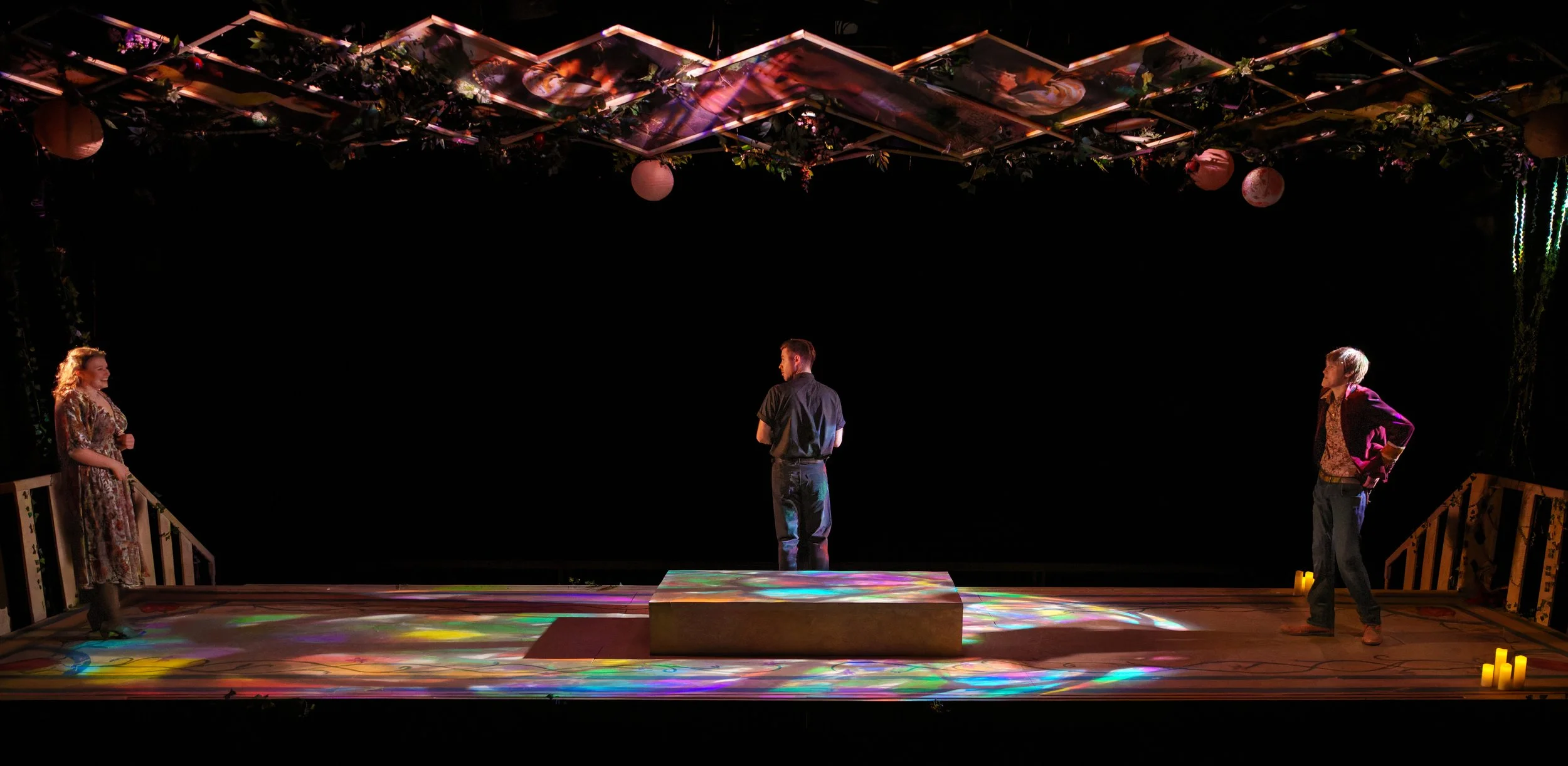
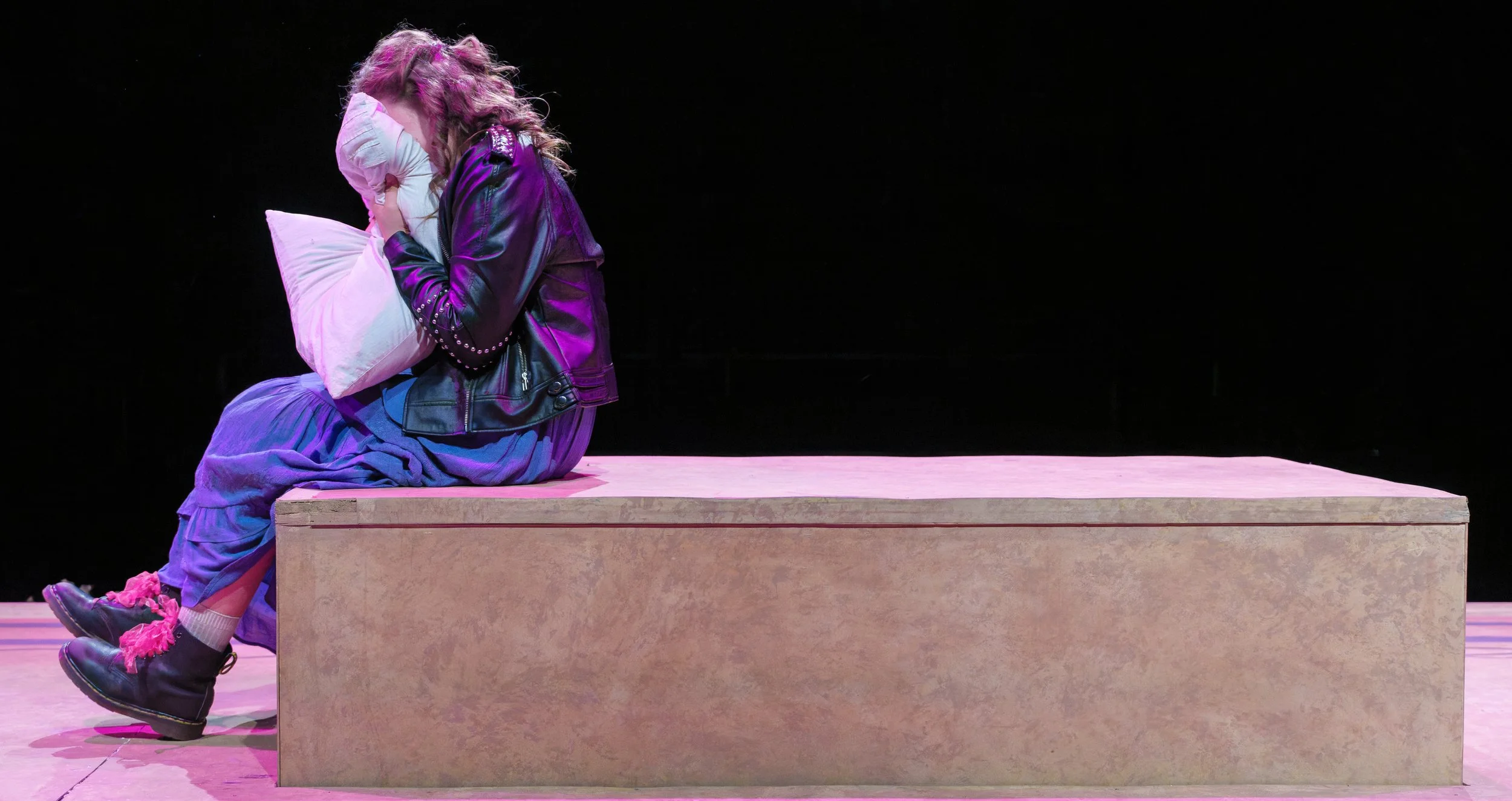
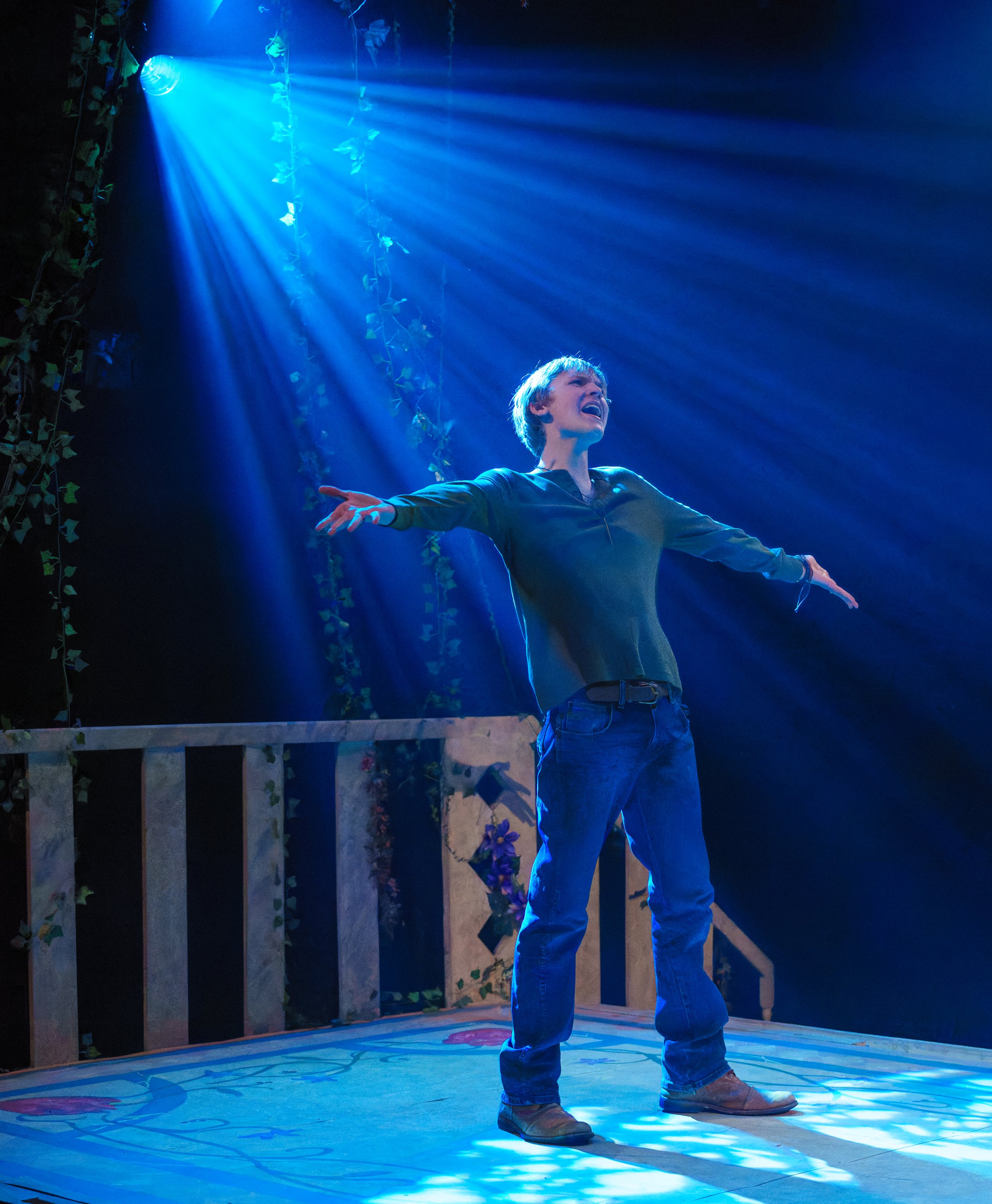
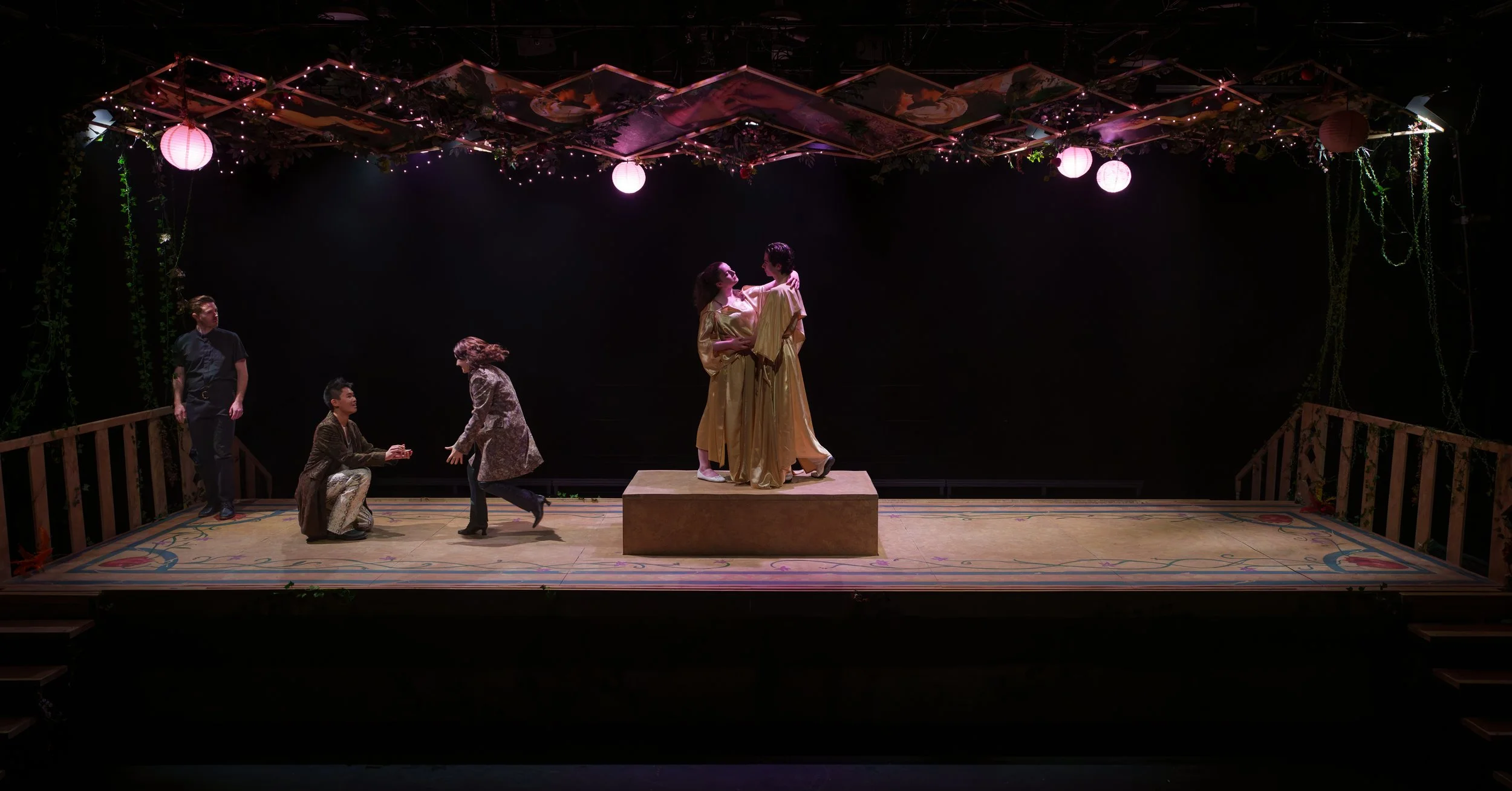
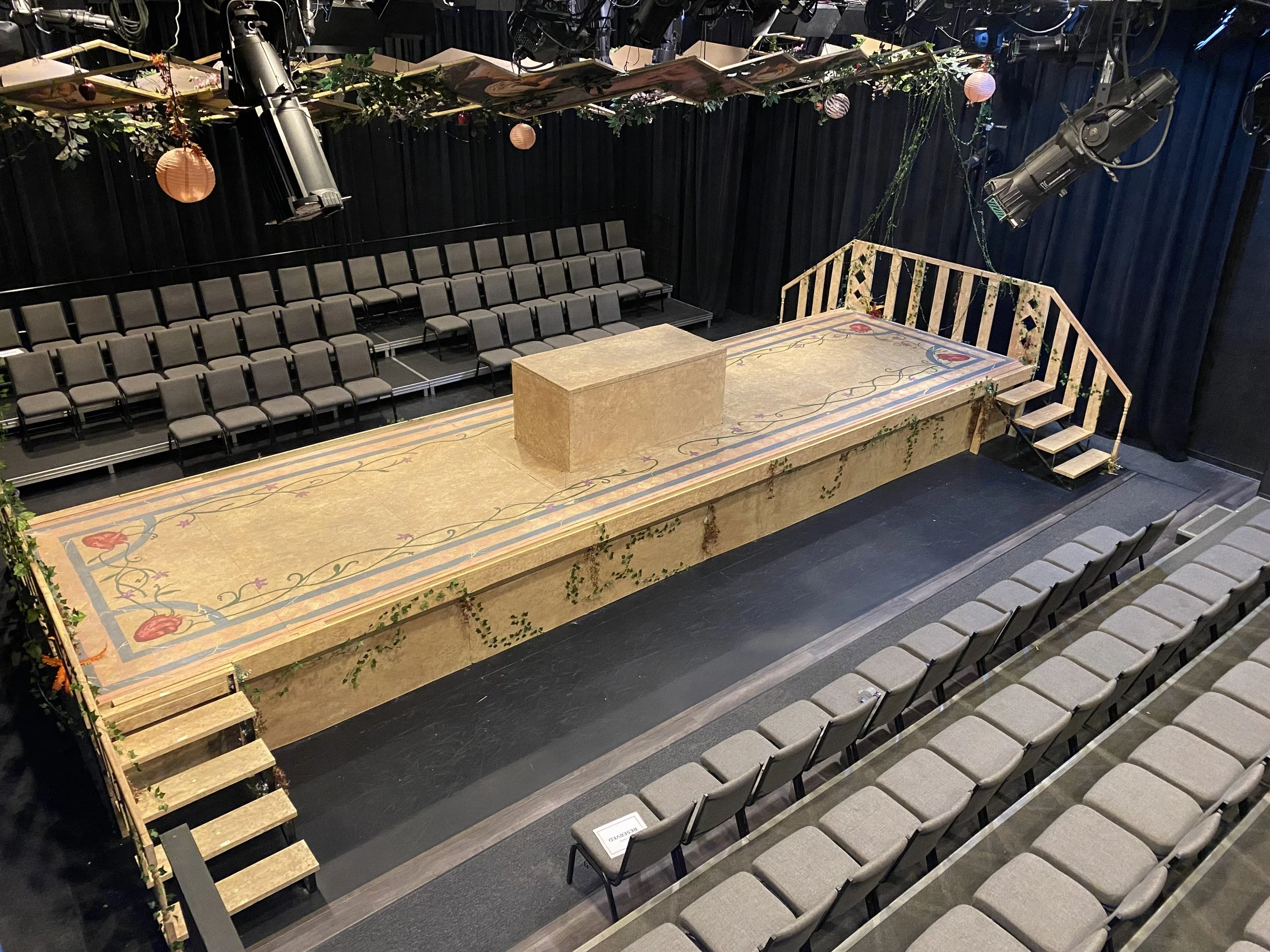
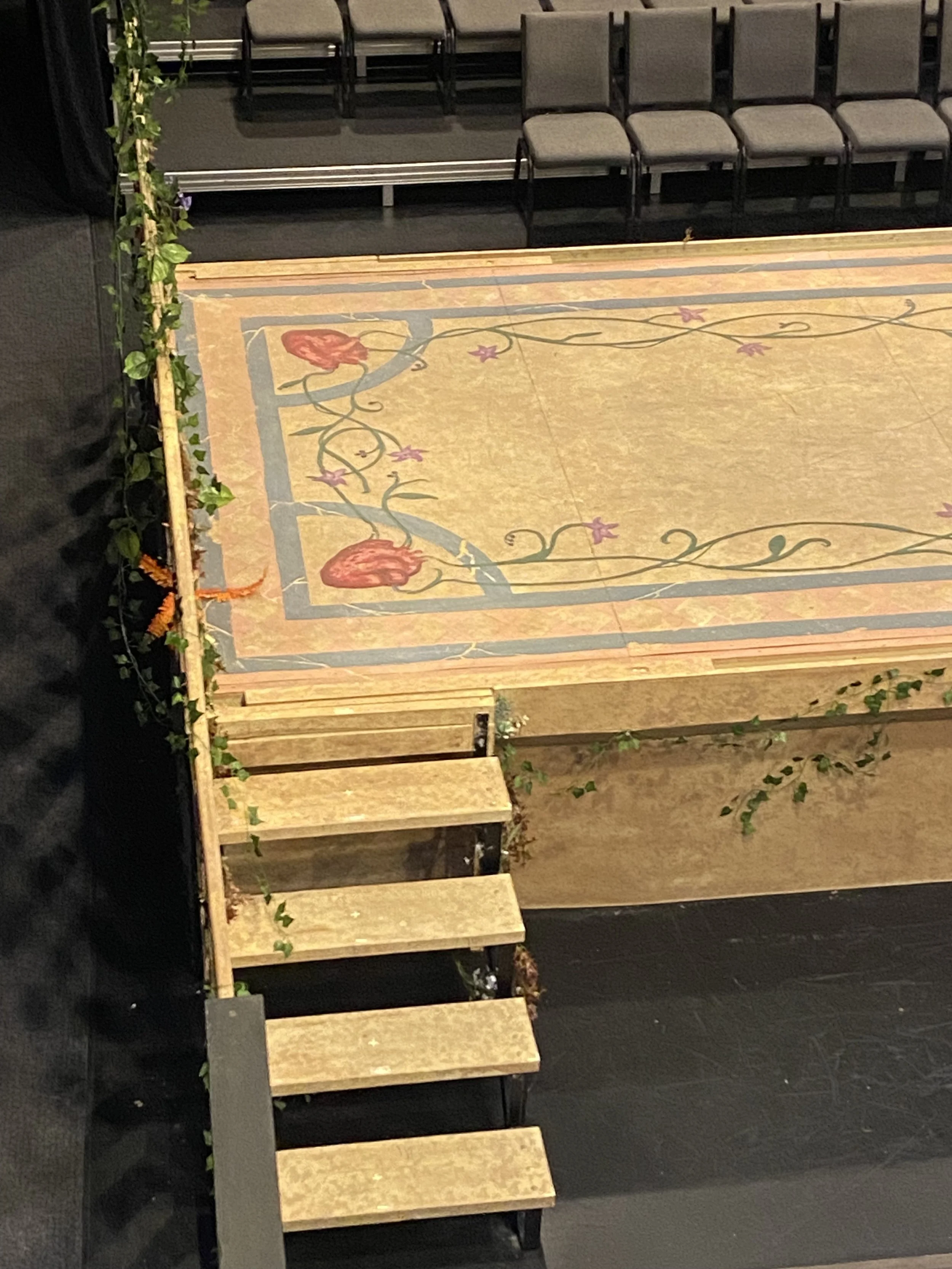
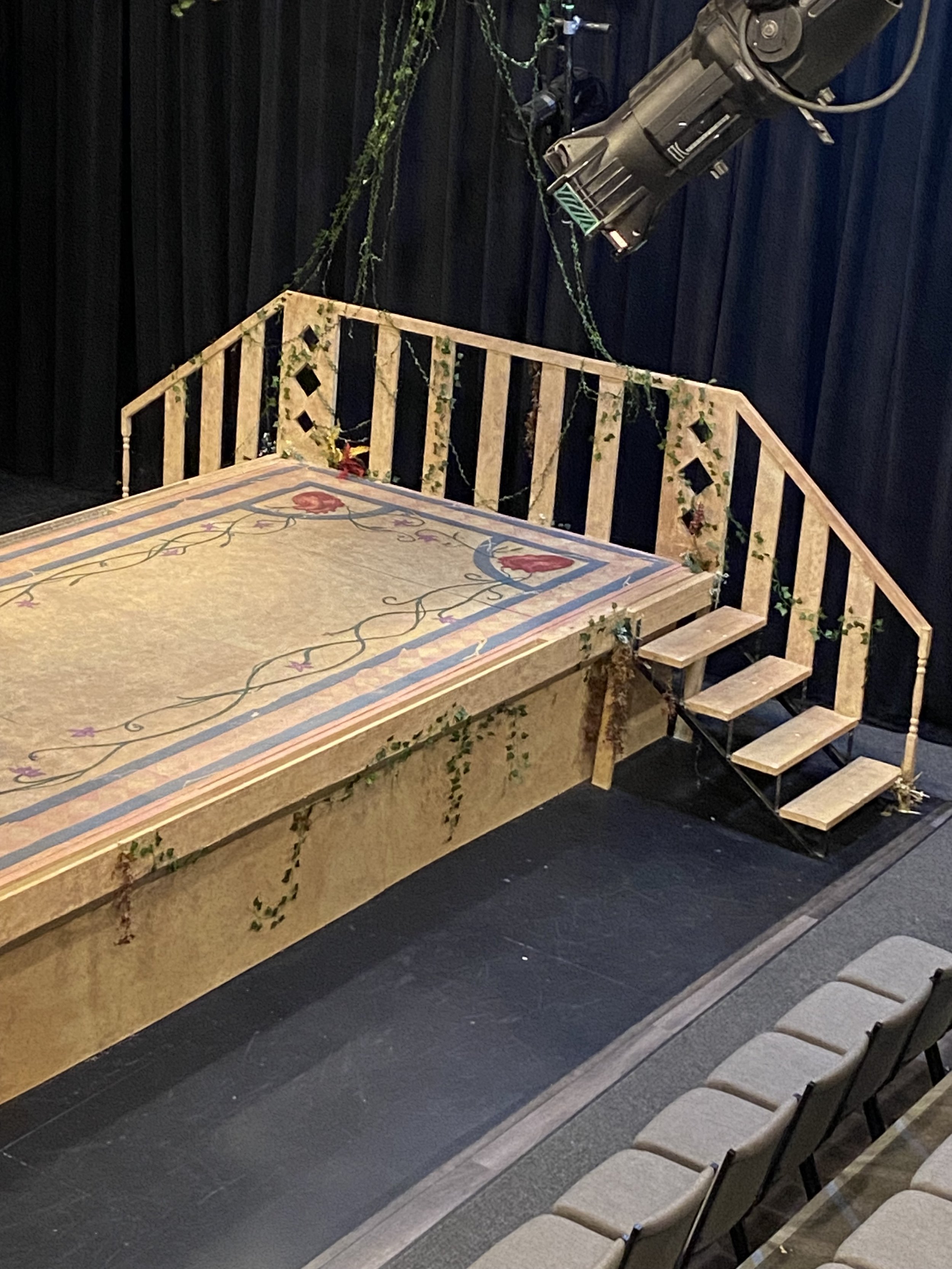
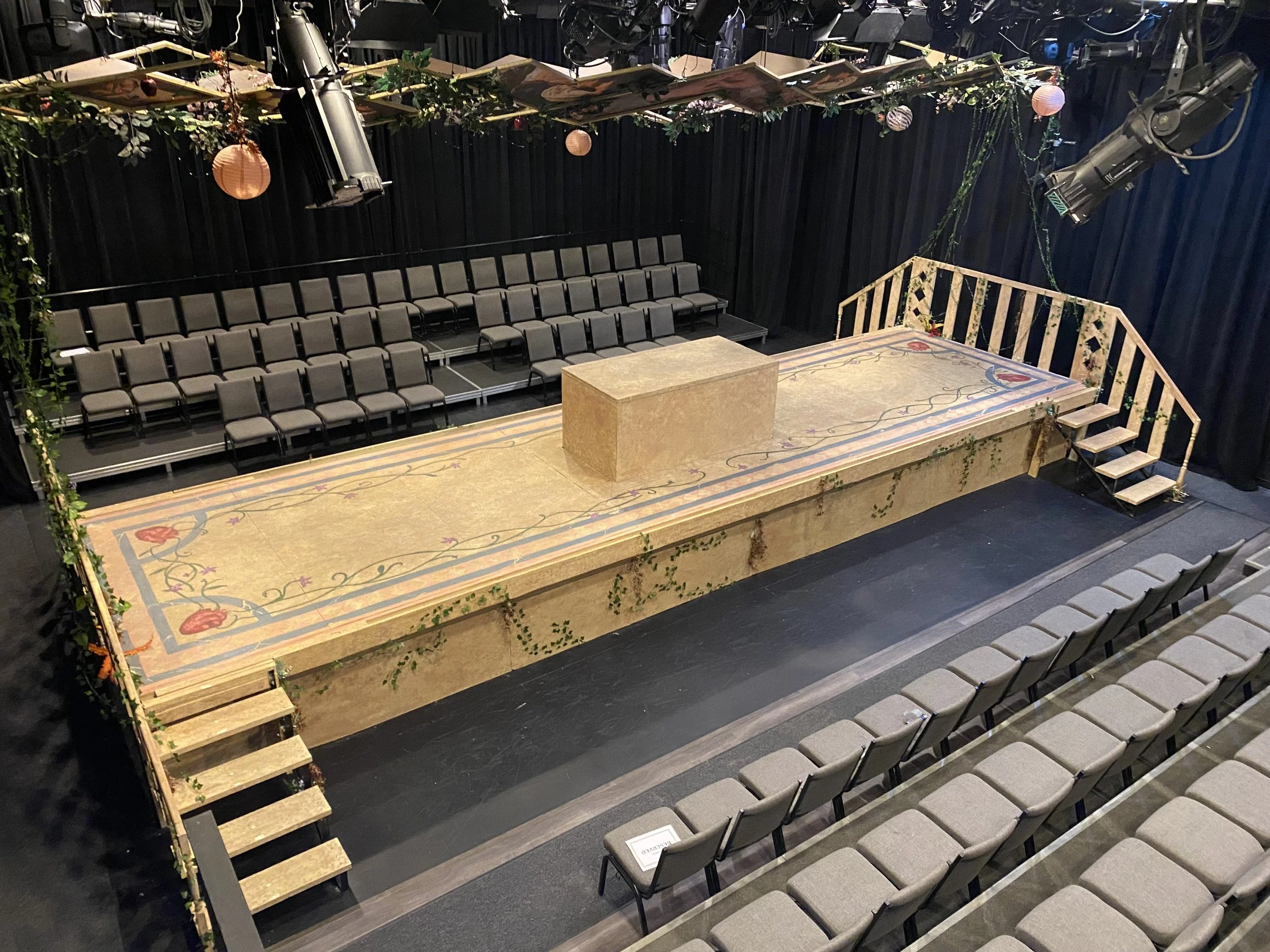
Show photos by Rob Galbraith
Behind the Scenes
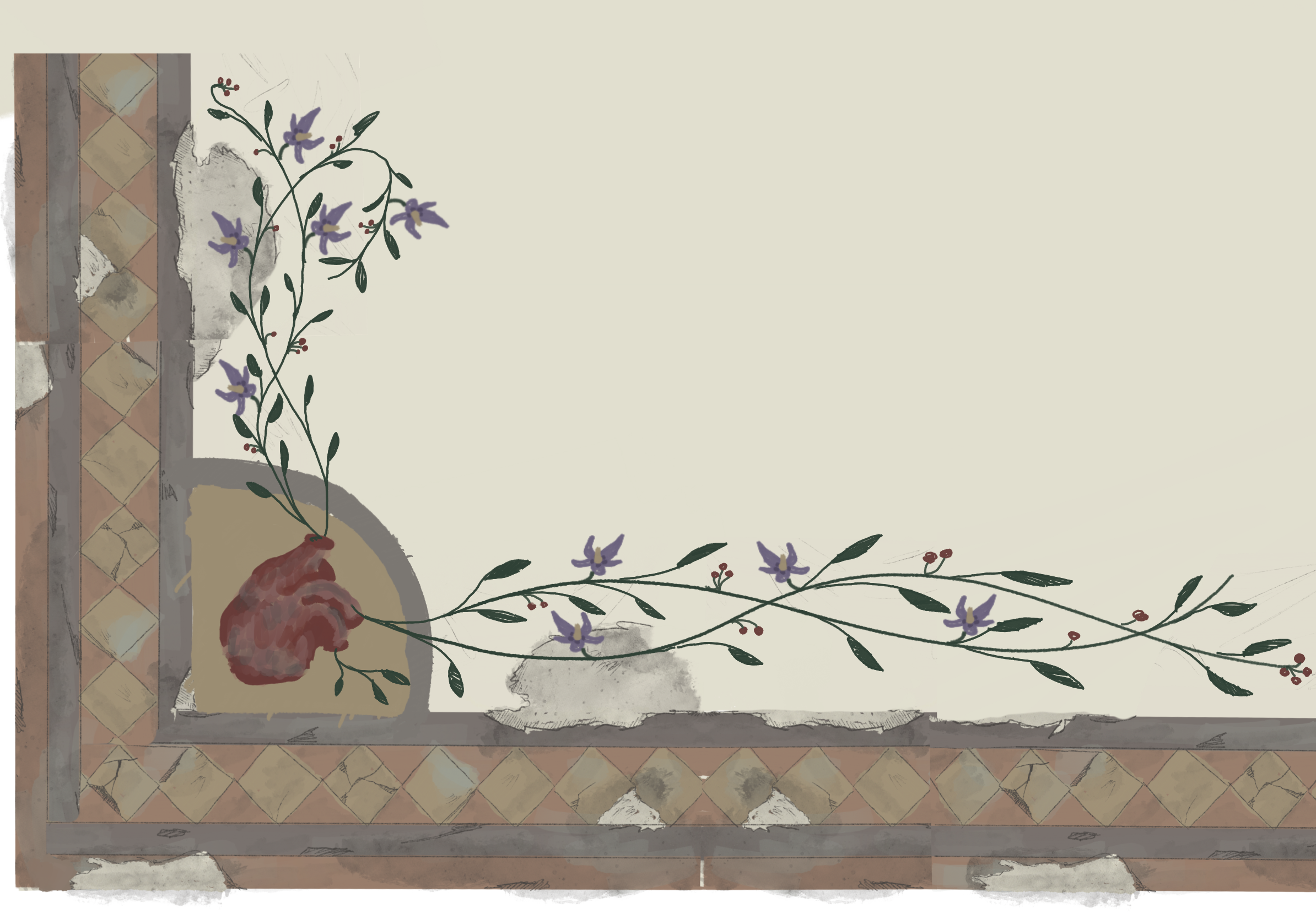
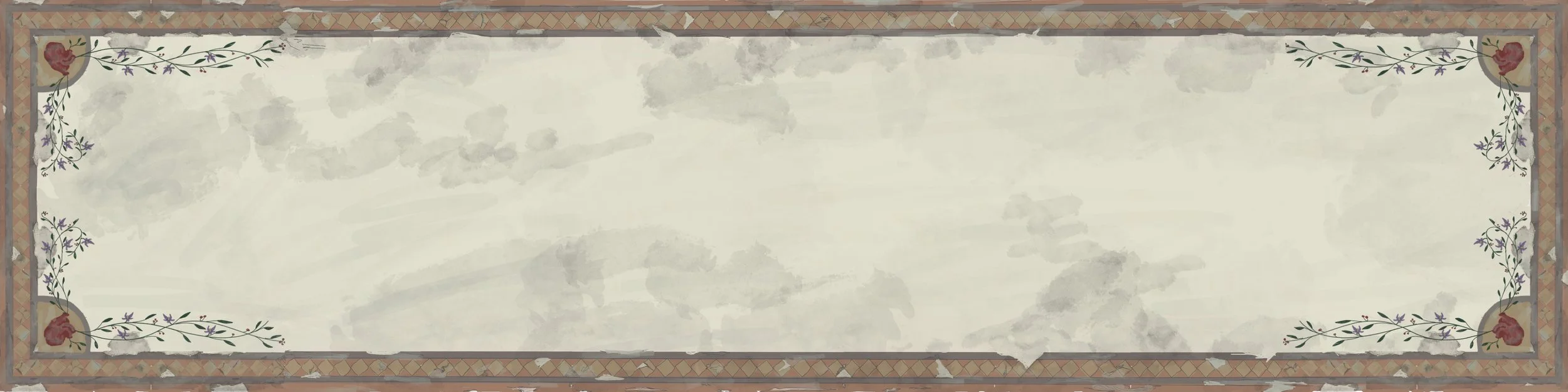
The stage was painted with a Venetian tile sort of look with anatomical hearts sprouting nightshade flowers.
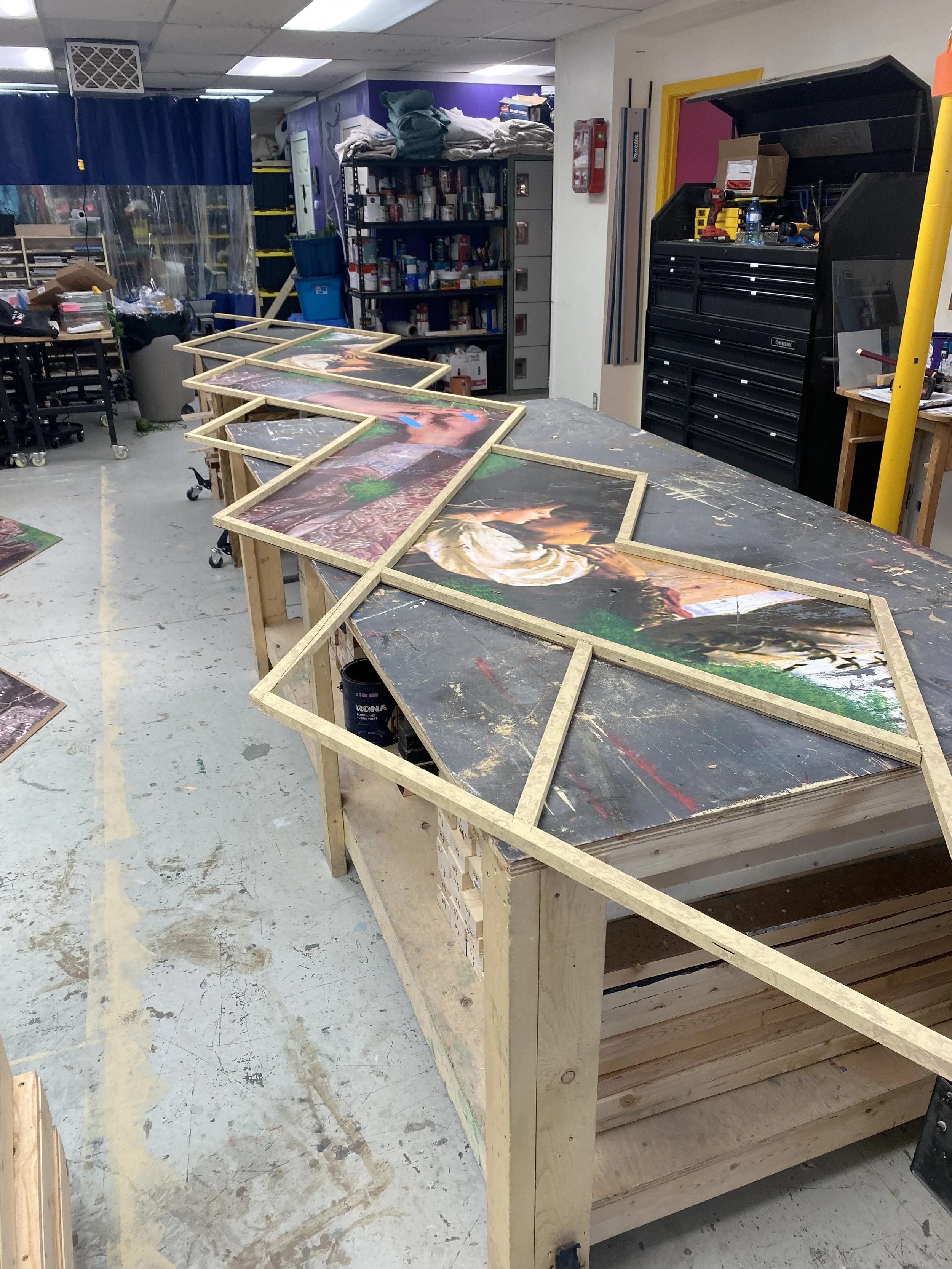
The paintings on the canopy were all public domain classical depictions of Romeo and Juliet. They were edited in Affinity Designer (very similar to Photoshop) and then exported, printed on over 250 8.5×11 pieces of printer paper, and painstakingly trimmed and glued onto masonite. Frames were then built around them, with plastic foliage glued to the frame.
Other design iterations
We had intended to include four panels that would slide along the edge of the stage, and pivot inwards. These could then be used as doors, windows, and walls. They were framed plexiglass, with rear projection film applied to them. This meant that they could be seen through, and also projected onto. The goal was to be able to layer classical artworks on top of the performance. Ultimately, this element was cut.